

Introduction
Every fabrication business reaches a point where the same question comes up: How do we get cleaner cuts, faster output, and better fitment without increasing rework?
Traditional methods have done the job for years. Punching and manual cutting all have their place. But as designs get tighter and orders become more customised, these methods start slowing things down—not because they fail, but because expectations have changed.
Across India, laser cutting machines are stepping in to handle this shift. From EV battery trays and control panels to architectural panels and electrical components, laser-cut parts are already part of what businesses make, sell, and install every day.
This blog explains where laser cutting machines fit in, the problems they solve, and how to choose the right setup for your application.
Why Indian Workshops Are Moving Toward Laser Cutting
Indian manufacturing is becoming more demanding. Buyers want better finish, faster dispatch, tighter fitment, and small-batch flexibility. At the same time, fabrication businesses are handling more customised orders than before.
India's metal fabrication market is expected to grow steadily due to infrastructure, automotive, construction, and industrial manufacturing demand.
A laser cutting machine CNC setup helps Indian workshops handle this shift because digital files guide the cutting path. That means fewer manual marking errors, better repeatability, and cleaner sheet utilisation.
Key gains include:
- Cleaner edges with less grinding
- Faster custom profile changes
- Better hole accuracy
- Lower sheet wastage
- Repeatable production quality
Automotive: EV Battery Trays, Brackets, and Support Plates
Automotive suppliers live with tight tolerances. A bracket hole placed even slightly off can affect fitment in the next assembly stage. This is why laser cutting machines are becoming more relevant for Indian Tier 1, Tier 2, and Tier 3 vendors.
India's auto component industry continues to grow rapidly. The rise of EV manufacturing is increasing demand for battery trays, mounting brackets, support plates, reinforcement plates, and other precision sheet metal parts.
Laser cutting machines are widely used for these components because they support accurate profiles, cleaner edges, and repeatable hole placement across batches. Traditional punching works well for repeated large-volume parts, but it depends on tooling. Plasma cutting can handle thicker materials, but edge finishing often takes extra time. Manual cutting adds variation and increases fitment inconsistencies.
- Value Proposition: Cleaner profiles, faster drawing-based production, and better repeatability.
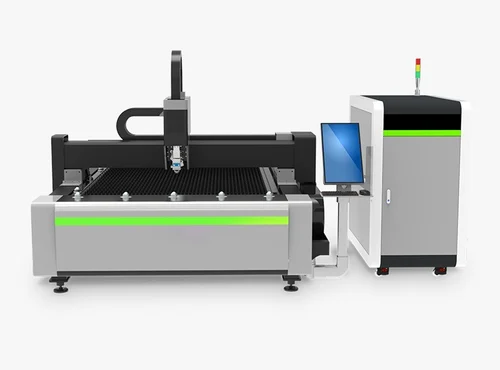
- Machine Connection: Automotive brackets and EV sheet parts are best suited to Fiber Laser Cutting Machines.
Sheet Metal Fabrication: Control Panels, Enclosures and Cabinets
Sheet metal fabrication is where laser cutting machines earn daily value. Indian fabricators making electrical panels, machine guards, cabinets, lift panels, HVAC parts and kiosks often deal with different cutouts, vents, hinges, slots and cable entry points.
A laser cutting machine metal sheet setup helps because every job can follow a CAD file. This is especially useful when one client needs 30 customised panels and another needs 300 repeat units.
| Fabrication Job | Older Method Issue | Laser Cutting Value |
|---|---|---|
| Electrical Panels | Punch tools limit custom slot changes | Faster profile updates |
| Machine Cabinets | Manual marking causes mismatch | Better repeatability |
| HVAC Parts | Burrs increase finishing time | Cleaner edges |
| Custom Enclosures | Small batches become costly | Flexible production |
Conclusion
Laser cutting technology is no longer limited to large factories. Small and medium manufacturers across India are adopting it because it improves quality, reduces production time, minimises wastage and increases customer satisfaction.
Choosing the right laser cutting machine depends on material, production volume and application requirements. With the right setup, businesses can achieve higher productivity while maintaining precision and consistency.
Frequently Asked Questions
Which industries use laser cutting machines in India?
Automotive, sheet metal fabrication, aerospace, agricultural equipment, architectural metalwork, signage, advertising, and electrical component manufacturing use laser cutting machines for cleaner and more repeatable cutting.
What is the best option for metal sheet cutting?
For a laser cutting machine metal sheet application, fiber laser cutting is usually preferred because it supports stainless steel, mild steel, aluminium, and other industrial metals.
Why does CNC matter in laser cutting?
A laser cutting machine CNC setup controls the cutting path through digital files. It improves repeatability, reduces manual marking errors, and speeds up job changes.